Rafael Griffin · 30 September 2026
Infrared Scans of Maritime Support Beams Uncover Seasonal Wear Patterns in Remote Harbor Sites
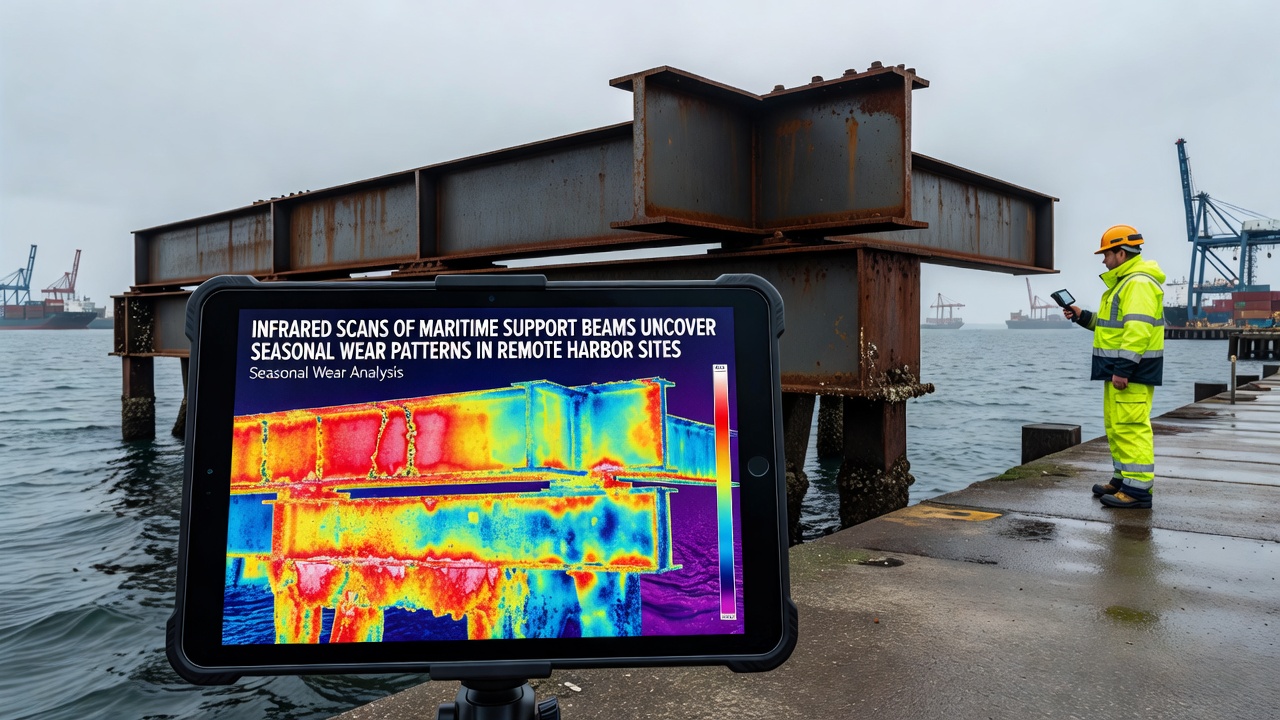
Remote harbor facilities rely on robust support beams that endure constant exposure to saltwater, tidal shifts, and fluctuating weather conditions, and infrared scanning techniques have emerged as a key method for identifying wear without invasive procedures, while data collected across multiple seasons shows distinct thermal signatures that correlate with temperature changes, moisture levels, and material fatigue. Researchers apply handheld and drone-mounted infrared cameras to capture heat emission patterns on steel and concrete beams, and these images highlight areas where corrosion accelerates during winter months due to freeze-thaw cycles that introduce micro-cracks, whereas summer scans often reveal accelerated oxidation in zones with trapped humidity from tidal splashes.
Application of Infrared Thermography in Harbor Environments
Engineers deploy infrared cameras during low-tide windows to access beam surfaces directly, and the technology measures surface temperature differentials that indicate subsurface defects such as delamination or water intrusion, while calibration against ambient air temperatures allows precise mapping of anomalies that would otherwise remain hidden beneath protective coatings. Studies conducted at isolated coastal locations demonstrate that beams in northern latitudes exhibit stronger seasonal contrasts because prolonged cold periods increase thermal conductivity variations in compromised sections, and operators combine these scans with visual inspections to prioritize maintenance in areas showing persistent cold spots during colder months. Data from repeated surveys at sites in the Pacific Northwest and northern Europe indicate that wear patterns intensify after heavy precipitation events followed by rapid temperature drops, creating predictable cycles that maintenance teams now track through annual infrared campaigns.
Seasonal Wear Patterns Identified Through Thermal Imaging
Analysis of infrared data reveals that support beams experience heightened degradation in transitional seasons, and springtime scans frequently detect residual moisture from winter ice melt that promotes rust expansion within beam joints, whereas autumn readings show increased heat retention in areas affected by summer biofouling that retains saltwater and accelerates pitting corrosion. Remote sites in regions like Alaska and the Canadian Arctic present unique challenges because limited daylight and extreme cold restrict inspection windows, yet portable infrared systems have documented consistent patterns where beam bases near the waterline display the most pronounced seasonal shifts due to repeated submersion and exposure cycles. Figures from ongoing monitoring programs show that beams with prior coating damage develop thermal gradients up to 15 degrees Celsius wider during winter compared to intact sections, and these gradients serve as reliable indicators for scheduling targeted repairs before structural integrity declines further.
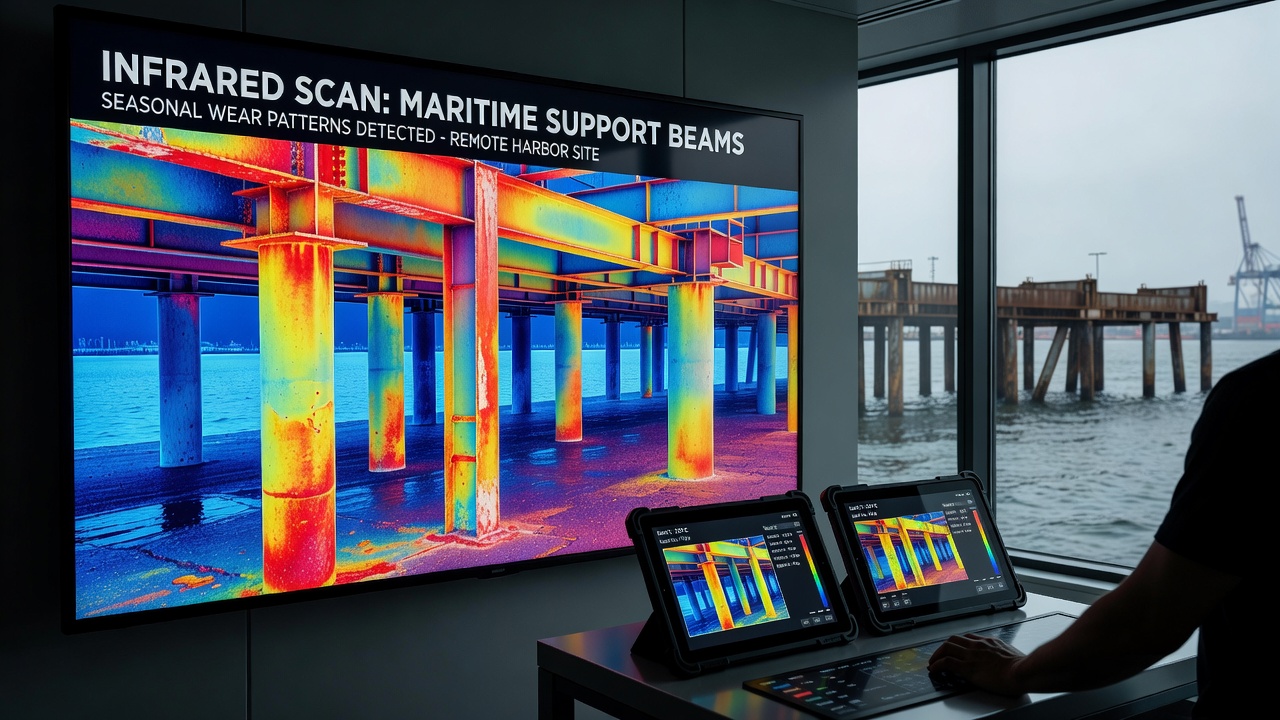
Remote harbor operators have integrated seasonal infrared protocols into their asset management systems, and results from surveys completed in September 2026 across several isolated facilities confirmed that wear accumulation follows repeatable annual rhythms tied to local climate data, while cross-referencing with tide charts and temperature logs strengthens the correlation between environmental factors and detected thermal anomalies. Observers note that beams in sheltered coves show different patterns than those facing open water, because wave action in exposed locations removes loose material faster and alters heat dissipation rates visible in infrared captures.
Supporting Data from Broader Infrastructure Assessments
According to reports from the National Oceanic and Atmospheric Administration, coastal infrastructure faces increasing stress from shifting weather patterns, and infrared methods complement traditional ultrasonic testing by providing rapid surface coverage over large beam networks in hard-to-reach locations. European research coordinated through maritime safety bodies has similarly documented how seasonal temperature swings affect load-bearing elements in northern ports, and these findings align with observations from Australian coastal engineering projects where infrared scans identified wear linked to monsoon-driven humidity cycles followed by dry season contraction. Teams at remote sites now compile multi-year thermal datasets to forecast maintenance needs, and the approach reduces downtime by focusing resources on beams exhibiting the clearest seasonal degradation signals rather than applying uniform inspection schedules across entire facilities.
Conclusion
Infrared scans continue to deliver detailed insights into how maritime support beams respond to seasonal environmental pressures at remote harbor sites, and the accumulated evidence points to predictable wear cycles that maintenance programs can address proactively through targeted interventions. Continued application of this technology across diverse geographic regions supports more resilient infrastructure planning, while integration with environmental monitoring data refines the accuracy of pattern identification over successive inspection periods.