Yves Albrecht · 11 November 2026
Ocean Current Shifts Expose Material Degradation in Submerged Jetty Components at River Deltas
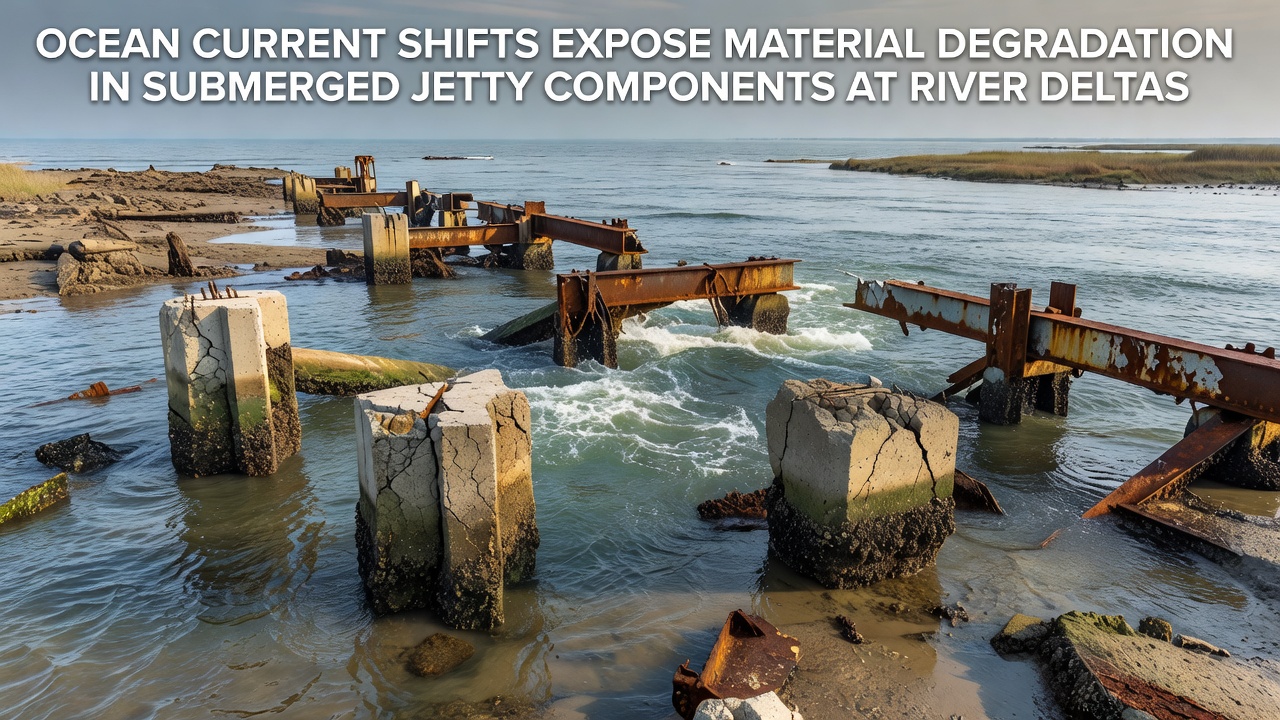
Shifting ocean currents have begun altering the conditions around submerged jetty structures where rivers meet the sea, and researchers have documented accelerated material loss in steel pilings, concrete encasements, and protective coatings at several delta locations. Data collected through 2026 shows that changes in flow velocity and sediment transport patterns increase exposure to abrasive particles and varying salinity levels, which together speed up corrosion and erosion processes on components that remain underwater for extended periods.
Current Dynamics in Delta Environments
River deltas create zones where freshwater outflows interact with stronger marine currents, and these interactions have grown more pronounced in recent years according to satellite observations and in-situ measurements. Studies from monitoring networks indicate that altered current directions now direct higher volumes of suspended sediment directly against jetty supports, whereas previous patterns allowed more even distribution around the structures. This shift concentrates mechanical wear on specific faces of the pilings, and engineers have recorded measurable thinning of metal sections at depths between five and fifteen meters below the surface.
November 2026 readings from sensor arrays placed along multiple delta systems confirm that peak flow speeds during tidal cycles have increased by measurable percentages compared with baseline data from a decade earlier, and these higher velocities coincide with periods of reduced sediment deposition that normally provides a protective layer. Observers note that the combination leaves bare surfaces more vulnerable to ongoing chemical and physical attack from the surrounding water column.
Material Degradation Patterns Identified
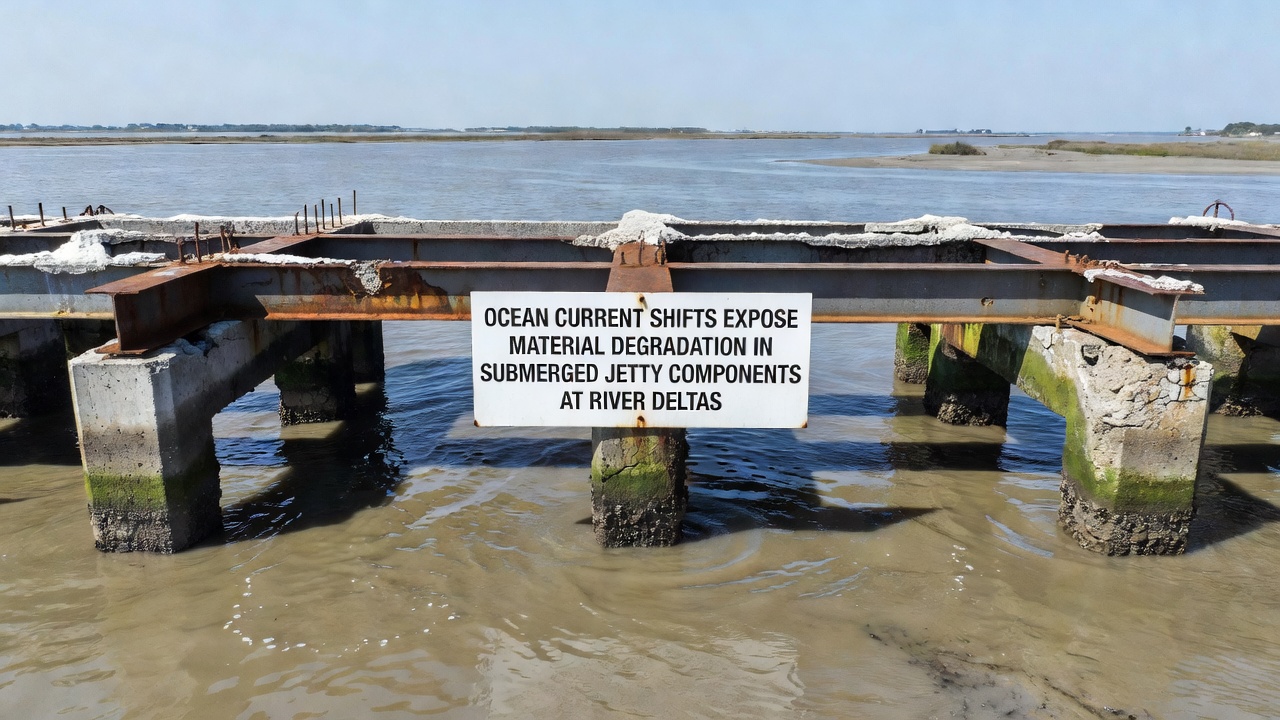
Submerged components experience distinct degradation sequences once protective barriers begin to fail, and field inspections reveal pitting corrosion on steel elements alongside cracking in concrete sections that once shielded the metal cores. Research teams have mapped these patterns across several sites and found that areas facing the dominant current direction show the most advanced loss, while sheltered sides retain more of their original coating integrity. The process accelerates when seasonal temperature fluctuations coincide with higher current speeds, because expanded micro-cracks allow deeper penetration of chlorides and oxygen.
Figures from long-term monitoring programs show that average section loss rates on affected pilings have risen steadily since 2020, with the steepest increases recorded at locations where current vectors changed by more than twenty degrees over a five-year span. Technicians performing routine maintenance have reported that previously stable coatings now delaminate within months rather than years, exposing fresh substrate to the abrasive action of moving water and entrained particles.
Regional Monitoring Efforts and Findings
Coastal authorities in different geographic zones have implemented sensor networks that track both current profiles and structural response, and the resulting datasets allow direct comparison of degradation rates under varying flow regimes. One study conducted along the U.S. Gulf Coast documented accelerated wear on jetty components after current shifts redirected sediment plumes, while parallel work in northern European estuaries identified similar patterns linked to changes in prevailing wind-driven flows. Australian research groups have contributed additional records from the Murray-Darling outflow region, where increased current turbulence correlates with higher rates of coating breakdown on submerged steel.
Those who maintain the infrastructure note that visual and ultrasonic inspections now occur more frequently at identified high-risk zones, and the collected evidence supports targeted reinforcement rather than uniform replacement across entire structures. Data shared through international coastal engineering forums shows consistent trends: locations experiencing the largest current vector changes also report the earliest onset of measurable material loss.
Monitoring Technologies in Use
Modern assessment combines acoustic Doppler current profilers with electrochemical sensors mounted directly on jetty elements, allowing continuous recording of both environmental conditions and corrosion rates. Teams deploy remotely operated vehicles equipped with high-resolution cameras to capture images of surface conditions at depths where diver access remains limited, and these visual records help confirm quantitative measurements taken from embedded probes. The approach provides a clearer picture of how localized flow acceleration translates into physical damage over successive tidal cycles.
Integration of these datasets has enabled predictive modeling that forecasts remaining service life for individual components based on projected current patterns, and operators have begun scheduling interventions during periods of lower flow to minimize further exposure. Reports issued by agencies such as NOAA and European marine monitoring programs highlight the value of combining hydrodynamic data with structural health metrics for more accurate planning.
Conclusion
Continued observation through late 2026 demonstrates that ocean current modifications at river deltas directly influence the rate at which submerged jetty materials degrade, and the evidence points to measurable increases in section loss where flow velocities and sediment loads have changed. Infrastructure managers now rely on integrated monitoring systems to identify vulnerable sections before critical thresholds are crossed, and the accumulated records from multiple regions support refined maintenance schedules that account for these evolving environmental forces. Further data collection will refine the models used to anticipate future performance under shifting current regimes.